Probate Q&A Series

Page 293 of 604

Probate Q&A Series ·

Do medical bills get paid before or after a surviving spouse’s claim or an equitable distribution claim against the estate? nc

Do medical bills get paid before or after a surviving spouse’s claim or an equitable distribution claim against the estate? – North Carolina Short Answer In North Carolina, a surviving spouse’s year’s allowance is generally handled before most creditor claims, and it is protected from the decedent’s other debts. By contrast, ordinary medical bills are…

Read more
Probate Q&A Series ·

Can my spouse’s parents challenge my right to a year’s allowance or other spousal benefits from the estate? nc

Can my spouse’s parents challenge my right to a year’s allowance or other spousal benefits from the estate? – North Carolina Short Answer Yes. In North Carolina, a decedent’s parents (or other interested people) can participate and may challenge a surviving spouse’s claim to a year’s allowance and certain other spousal benefits, especially by arguing…

Read more
Probate Q&A Series ·

How do I transfer a deceased parent’s real property into the surviving spouse’s name if there was no will? nc

How do I transfer a deceased parent’s real property into the surviving spouse’s name if there was no will? – North Carolina Short Answer In North Carolina, real property owned in an individual name does not automatically “move” into the surviving spouse’s name just because there was no will. The surviving spouse’s share depends on…

Read more
Probate Q&A Series ·

Can I throw away, sell, or move a deceased relative’s belongings that were left on my property, or do they have to stay with the estate? nc

Can I throw away, sell, or move a deceased relative’s belongings that were left on my property, or do they have to stay with the estate? – North Carolina Short Answer In North Carolina, a deceased person’s belongings generally become part of the estate once a personal representative (executor/administrator) is appointed, and that person has…

Read more
Probate Q&A Series ·

How can we sell a house when one co-owner died and the heirs can’t agree on the sale details? nc

Recent Legal Update Updated: April 2026 This article has been updated to reflect current North Carolina partition and estate-administration statutes, including Chapter 46A and related probate provisions. The core rule remains the same: a co-owner or, in some situations, the personal representative may use a court-supervised proceeding to force a sale when heirs or co-owners…

Read more
Probate Q&A Series ·

How are proceeds from a deceased parent’s pending personal-injury claim paid out when there’s a small-estate affidavit instead of full probate? nc

How are proceeds from a deceased parent’s pending personal-injury claim paid out when there’s a small-estate affidavit instead of full probate? – North Carolina Short Answer In North Carolina, a pending personal-injury claim usually cannot be paid directly to an heir just because a small-estate affidavit is being used for other assets. Most insurers and…

Read more
Probate Q&A Series ·

How does trust administration work when a company is named as trustee and the beneficiaries haven’t been contacted yet? nc

How does trust administration work when a company is named as trustee and the beneficiaries haven’t been contacted yet? – North Carolina Short Answer In North Carolina, a corporate trustee generally takes control of trust assets after the settlor’s death, pays appropriate expenses, and then makes distributions under the trust’s terms. Even if beneficiaries have…

Read more
Probate Q&A Series ·

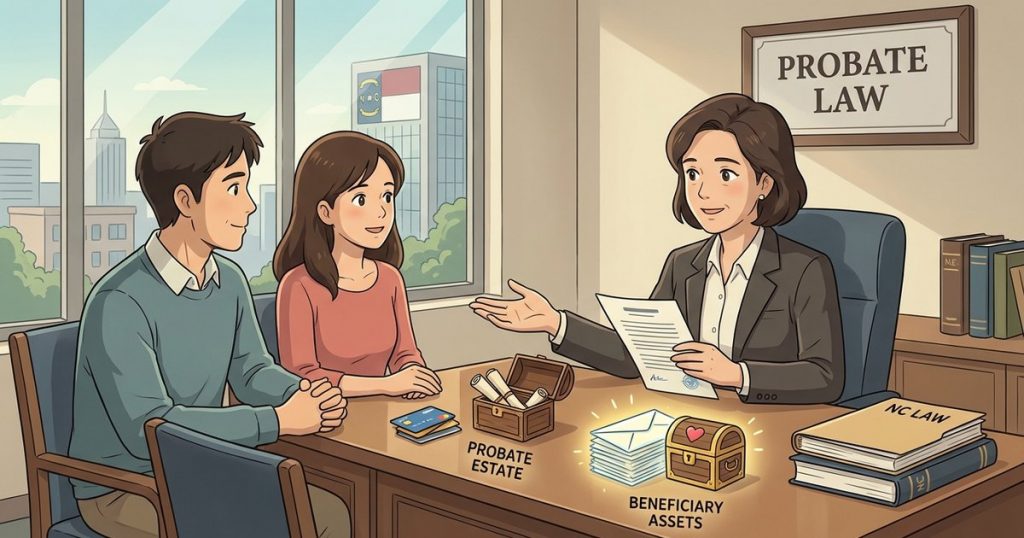
If the bank account and life insurance have beneficiaries and pass outside the estate, how are the deceased person’s credit card debts supposed to be paid? nc

If the bank account and life insurance have beneficiaries and pass outside the estate, how are the deceased person’s credit card debts supposed to be paid? – North Carolina Short Answer In North Carolina, credit card debt is normally paid from the probate estate (assets titled in the deceased person’s name alone), not automatically from…

Read more

Questions about your situation?

Attorney Jared Pierce
Free case evaluation

Articles are a starting point, not legal advice. Talk through the specifics of your case with a North Carolina attorney — the case evaluation is always free.

Go to Top
Free Consultation

Talk with a North Carolina attorney

Tell us a bit about your situation and we'll respond within one business day.

This site is protected by reCAPTCHA and the Google Privacy Policy and Terms of Service apply.